
Choosing the right monitor is essential if you want to get the most out of a powerful gaming computer. A high-end graphics card can deliver impressive frame rates, detailed textures, realistic lighting, and smooth gameplay, but your monitor determines how much of that performance you can actually see. Resolution, refresh rate, response time, panel technology, and adaptive sync all influence your gaming experience. 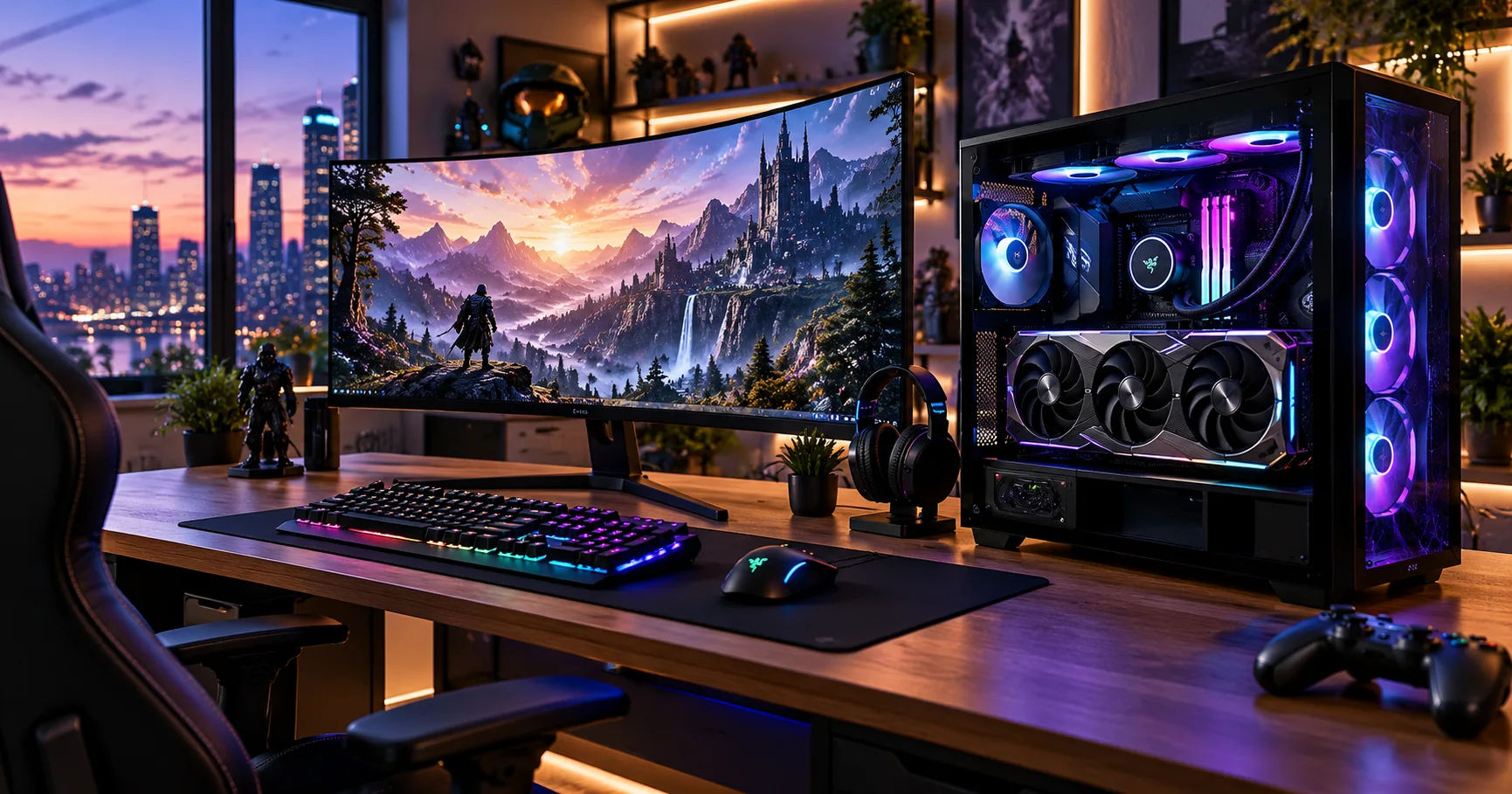 An nvidia 5080 gaming pc is designed for demanding gaming experiences, including 4K gaming, competitive esports, ray tracing, and graphically intensive open-world titles. However, not every monitor can take full advantage of its capabilities. A basic 1080p display may limit the visual experience, while an expensive 4K monitor with a low refresh rate might not suit players who prioritize competitive performance.
The best approach is to choose a monitor that matches your gaming habits, preferred resolution, and budget. In this guide, we will explore the most suitable monitor sizes, resolutions, refresh rates, panel types, and essential features to help you make an informed decision.
What Makes a Monitor Suitable for an NVIDIA 5080 Gaming PC?
A suitable monitor should balance visual quality, smooth performance, and practical features. Since the NVIDIA GeForce RTX 5080 is a high-performance graphics card, it can support demanding gaming setups that benefit from high resolutions and fast refresh rates.
Nevertheless, the best monitor depends on the games you play. Someone who enjoys cinematic single-player games may prefer stunning 4K visuals, while a competitive shooter player might prioritize extremely high refresh rates and low input latency.
Resolution and Image Quality
Resolution determines the number of pixels displayed on your screen. Higher resolutions generally produce sharper images, more detailed textures, and clearer text.
For an RTX 5080 system, these are the main options to consider:
-
1080p (1920 × 1080): Best suited to budget-conscious players and competitive gamers who prioritize very high frame rates.
-
1440p (2560 × 1440): A strong balance between sharp visuals, high refresh rates, and gaming performance.
-
4K (3840 × 2160): Excellent for detailed graphics, immersive single-player games, and large displays.
-
Ultrawide 1440p: Provides a wider field of view in supported games and an immersive experience for racing, simulation, and adventure titles.
For most enthusiasts, 1440p or 4K is the most sensible starting point. Both resolutions allow a powerful graphics card to deliver a more detailed experience than a standard 1080p display.
Refresh Rate and Smooth Gameplay
Refresh rate measures how many times your monitor refreshes its image each second. It is measured in hertz (Hz).
A 60Hz monitor refreshes 60 times per second, while a 144Hz monitor refreshes 144 times per second. Higher refresh rates can make camera movements, aiming, and fast-paced gameplay feel smoother.
For a high-end gaming system, consider the following refresh rates:
-
144Hz: Suitable for general gaming and smooth visuals.
-
165Hz to 180Hz: Excellent for a versatile gaming setup.
-
240Hz: Ideal for competitive players who value responsiveness.
-
360Hz or higher: Best for specialized competitive setups where very high frame rates are achievable.
A 240Hz monitor is not automatically better for every player than a 165Hz model. The difference matters most when your games and hardware can deliver sufficiently high frame rates.
Best Monitor Resolution for an NVIDIA 5080 Gaming PC
Resolution nvidia 5080 gaming pc is one of the most important purchasing decisions because it affects image quality, performance demands, and the size of the display you should choose.
Is 4K the Best Choice?
For players who want exceptional visual detail, 4K is an excellent match for an RTX 5080 gaming system.
A 4K monitor displays approximately 8.3 million pixels, four times the pixel count of a 1080p display. This makes fine details, distant objects, and high-resolution textures appear noticeably sharper, particularly on larger screens.
Games with detailed environments, realistic lighting, and cinematic presentation can benefit significantly from 4K resolution. Titles such as Cyberpunk 2077, Microsoft Flight Simulator, and visually demanding adventure games can look spectacular on a suitable 4K display.
However, 4K gaming requires substantial graphics processing power. Ray tracing, path tracing, and demanding graphical settings can reduce frame rates considerably. Technologies such as NVIDIA DLSS can help improve performance in supported games, although results vary by title and settings.
For many players, a 32-inch 4K monitor with a 144Hz to 240Hz refresh rate offers an attractive combination of sharpness and smoothness.
Why 1440p Is Also an Excellent Option
A 1440p monitor is ideal for players who want high frame rates without sacrificing too much image quality.
Compared with 4K, 1440p renders substantially fewer pixels. This reduces the workload on the graphics card and can help deliver higher frame rates in demanding games.
A 27-inch 1440p monitor is particularly popular because it offers a good balance between screen size and pixel density.
For competitive gaming, a 1440p monitor running at 240Hz can be an excellent choice. It combines clear visuals with fast refresh rates, making it suitable for shooters, multiplayer games, and other titles where responsiveness matters.
Choose 1440p if you prefer faster gameplay, want to save money on your display, or play a mixture of competitive and demanding games.
Should You Choose an Ultrawide Monitor?
Ultrawide monitors provide a wider aspect ratio than traditional 16:9 displays. A common option is 3440 × 1440 resolution with a 21:9 aspect ratio.
The additional horizontal space creates a more immersive experience in racing games, flight simulators, role-playing games, and open-world adventures.
An ultrawide monitor can also be useful for multitasking. You can keep a game, browser window, or communication application visible alongside other content, depending on the software and screen layout.
However, ultrawide gaming requires additional rendering performance compared with standard 1440p. Some games also have limited ultrawide support or may restrict the field of view in competitive modes.
If immersion is your priority, ultrawide is worth considering. If you mainly play competitive esports, a standard 16:9 monitor may be more practical.
Which Monitor Size Should You Buy?
Screen size affects comfort, immersion, and image clarity. The ideal size depends on your viewing distance, desk space, and chosen resolution.
27-Inch Monitors
A 27-inch monitor is an excellent all-purpose option for PC gaming.
At 1440p, it offers good pixel density and enough screen space for detailed graphics without overwhelming a typical desk. It is particularly suitable for players who enjoy competitive games but also want impressive visuals in single-player titles.
A 27-inch display with a 165Hz, 180Hz, or 240Hz refresh rate is a versatile option.
You can also choose a 27-inch 4K monitor if you prioritize sharper text and more detailed images. However, some users prefer 32 inches for 4K because the additional screen area makes the resolution easier to appreciate.
32-Inch Monitors
A 32-inch monitor is especially appealing for 4K gaming.
The larger screen creates a more cinematic experience and makes high-resolution environments feel immersive. It is a strong option for players who enjoy exploring detailed game worlds, watching films, or using their PC for productivity.
For an RTX 5080 setup, a 32-inch 4K display with a high refresh rate can be an excellent long-term investment.
Make sure your desk provides enough viewing distance. Sitting too close to a large screen may require frequent eye or head movement, particularly during competitive games.
34-Inch and Larger Monitors
A 34-inch ultrawide monitor offers a wider gaming experience without requiring an extremely large screen.
Larger 38-inch, 40-inch, or 49-inch displays can provide even more immersion, but they require additional desk space and careful consideration of resolution and aspect ratio.
For example, a 49-inch super-ultrawide display may offer a 32:9 aspect ratio, effectively providing the horizontal workspace of two side-by-side monitors.
These displays can be excellent for simulation games and productivity, but not every game supports their full resolution or aspect ratio.
Which Panel Technology Is Best?
The panel determines how your monitor produces images. The main technologies to consider are OLED, IPS, and VA.
OLED Monitors
OLED is an outstanding option for players who want deep blacks, strong contrast, and fast pixel response times.
Unlike traditional LCD panels, OLED pixels can turn off individually. This allows dark scenes to appear genuinely black and helps create striking contrast in games with nighttime environments or dramatic lighting.
OLED monitors can also provide very fast response times, making them attractive for both immersive gaming and competitive play.
Their main disadvantages include higher prices, potential image retention or burn-in over time, and brightness limitations in certain full-screen scenarios. Modern OLED monitors include protective features, but these do not eliminate every long-term risk.
If image quality is your highest priority and your budget allows it, an OLED display deserves serious consideration.
IPS Monitors
IPS monitors are versatile and widely available. They generally offer good color reproduction, broad viewing angles, and reliable performance across different types of content.
A high-refresh-rate IPS monitor is suitable for esports, everyday gaming, creative work, and general productivity.
IPS models often cost less than comparable OLED displays, particularly at 1440p. They may not deliver the same black levels or contrast as OLED, but modern implementations can still provide excellent image quality.
For buyers who want a balanced display without paying a premium for OLED, IPS is a dependable choice.
VA Monitors
VA panels generally offer stronger contrast than traditional IPS panels. This can improve the appearance of dark scenes and make them suitable for cinematic gaming.
However, some VA models exhibit slower dark-pixel transitions, which can create smearing during fast movement. Performance varies substantially between individual monitors.
A good VA monitor can be a sensible choice for immersive gaming, particularly if it offers high contrast and a competitive price. Check independent response-time testing before buying.
Recommended Monitor Specifications
The following specifications provide a practical starting point for choosing a display for a high-performance gaming computer.
|
Gaming priority |
Recommended monitor |
Refresh rate |
|---|---|---|
|
Best all-round balance |
27-inch 1440p IPS |
165–240Hz |
|
Premium visual quality |
32-inch 4K OLED |
144–240Hz |
|
Competitive esports |
27-inch 1440p IPS or OLED |
240–360Hz |
|
Cinematic gaming |
32-inch 4K OLED |
120–240Hz |
|
Immersive simulation |
34-inch ultrawide OLED or VA |
144–240Hz |
|
Budget-friendly gaming |
27-inch 1440p IPS |
144–180Hz |
These are target specifications rather than guarantees of performance. Actual frame rates depend on the game, graphics settings, CPU, and upscaling options. Availability and pricing also vary by market.
Important Features to Look For
A high resolution and fast refresh rate are important, but other features can improve your overall experience.
NVIDIA G-SYNC and Adaptive Sync
Screen tearing happens when your monitor and graphics card display frames at different times. It can create visible horizontal breaks during movement.
Variable refresh rate technology helps synchronize the display's refresh cycle with the graphics card's output. NVIDIA G-SYNC monitors and compatible Adaptive-Sync displays can reduce tearing and stuttering.
For a powerful NVIDIA gaming setup, variable refresh rate support is a valuable feature.
Check whether a monitor is officially G-SYNC certified or listed as G-SYNC Compatible if that certification matters to you. Compatible displays can vary in their performance and supported refresh-rate ranges.
Response Time and Input Lag
Response time measures how quickly pixels change from one color or shade to another. A fast response time can reduce motion blur and ghosting.
Input lag measures the delay between an action, such as moving your mouse, and the corresponding image appearing on screen. It is different from pixel response time.
Competitive players should look for monitors with strong independent testing results, low input lag, and effective overdrive settings.
Do not choose a monitor based only on a manufacturer's advertised one-millisecond response time. Measurement methods differ, and aggressive overdrive can introduce distracting visual artifacts.
HDR Support
High Dynamic Range (HDR) can improve brightness, contrast, and color presentation in supported games.
However, not every monitor advertised as HDR-capable delivers a convincing HDR experience. Some entry-level displays accept HDR signals but lack the brightness, contrast, or local dimming needed to produce a meaningful improvement.
OLED monitors often provide excellent contrast, while strong Mini-LED monitors can deliver high brightness and effective local dimming.
If HDR matters to you, examine real-world brightness, local dimming performance, and independent reviews rather than relying solely on the HDR label.
Connectivity and DisplayPort
Your monitor must support the connection and bandwidth needed for its resolution and refresh rate.
DisplayPort is a common choice for high-refresh-rate PC gaming. HDMI 2.1 can also be useful for high-bandwidth displays and connecting gaming consoles.
Before purchasing, verify the exact port specifications. Not every HDMI or DisplayPort connection supports every combination of resolution, refresh rate, and color depth.
Also consider USB hubs, KVM switches, and USB-C connectivity if you plan to connect multiple computers or use the monitor for work.
How to Match the Monitor to Your Gaming Style
The best monitor depends on what you play most often.
For Competitive Games
Games such as Counter-Strike 2, Valorant, and Apex Legends reward smooth motion and responsive controls.
A 1440p monitor with a 240Hz refresh rate is an excellent choice for players who want both sharp visuals and high responsiveness. More competitive players may prefer a 360Hz display if their games can consistently deliver very high frame rates.
A 1080p high-refresh-rate monitor can still make sense for serious esports, but a powerful graphics card does not automatically make every higher-resolution display the better option.
For Single-Player and Story-Driven Games
If you enjoy cinematic adventures, role-playing games, and detailed open-world environments, consider a 32-inch 4K OLED monitor.
The combination of high resolution, deep blacks, and rich contrast can make landscapes, lighting effects, and character details more impressive.
A 4K IPS or Mini-LED display can also be an excellent alternative if you prefer higher sustained brightness or want to avoid OLED burn-in concerns.
For Racing and Simulation Games
Racing games, flight simulators, and driving simulations often benefit from ultrawide displays.
A 34-inch ultrawide monitor provides a broader view of the environment, while a larger super-ultrawide screen can create a more immersive cockpit experience.
Check game compatibility and desk space before committing to an unusually wide display.
Common Mistakes to Avoid When Buying a Monitor
Even with a powerful gaming computer, choosing the wrong monitor can lead to unnecessary expense or disappointing results.
Buying More Refresh Rate Than You Need
A 360Hz monitor can be excellent for competitive gaming, but it may offer limited practical value if your preferred games run far below that frame rate.
A 165Hz or 240Hz monitor may provide a better balance between cost, image quality, and performance.
Ignoring the Monitor's HDR Quality
An HDR label alone does not guarantee impressive contrast or brightness. Research the actual panel performance before paying extra for HDR.
Choosing a Resolution That Does Not Match Your Preferences
A 4K monitor prioritizes detail, while 1440p can provide a more comfortable path to higher frame rates. Consider whether you value visual fidelity or competitive responsiveness more.
Forgetting Ergonomics
A monitor should support comfortable long gaming sessions. Look for height adjustment, tilt, swivel, and VESA mounting compatibility if you plan to use a monitor arm.
Good ergonomics can matter just as much as a small increase in refresh rate, especially if you spend several hours a day at your desk.
Conclusion
Choosing the right monitor for an NVIDIA 5080 gaming PC means balancing resolution, refresh rate, panel technology, and the games you enjoy. The graphics card provides substantial gaming potential, but the display determines whether you experience that potential through sharper images, smoother motion, better contrast, or a more immersive field of view.
For most players, a 27-inch 1440p monitor with a 165Hz to 240Hz refresh rate is an excellent all-round choice. It delivers clear visuals, smooth performance, and flexibility across competitive and single-player games. If you want a premium visual experience, a 32-inch 4K OLED monitor with a 144Hz to 240Hz refresh rate is a compelling option, especially for cinematic titles and graphically demanding adventures.
Competitive gamers should prioritize refresh rate, low input lag, and reliable motion handling. Players who prefer immersive worlds should focus on resolution, contrast, HDR quality, and screen size. Meanwhile, racing and simulation enthusiasts may find an ultrawide display more enjoyable than a conventional monitor.
Before purchasing, check independent reviews, connection requirements, adaptive-sync support, warranty coverage, and local pricing. Remember that advertised specifications do not always reflect real-world performance.
Ultimately, the best monitor is not necessarily the most expensive one. It is the display that complements your gaming habits, fits your workspace, and lets you enjoy your computer's performance without spending money on features you will rarely use.