
Learning the Quran is a meaningful journey that can begin at any stage of life. Many people believe that Quran education is mainly for children, but adults can also develop strong reading skills, understand Quranic rules, and improve their pronunciation with proper guidance. Whether someone is a complete beginner or already familiar with Arabic letters, there are effective ways to improve Quran recitation.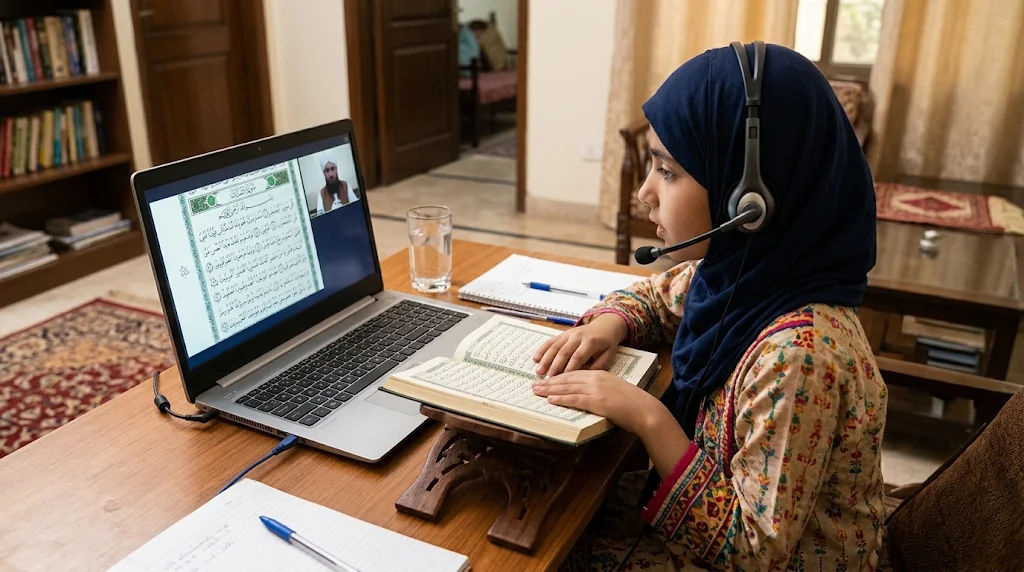
One common concern among adult learners is whether they can pronounce Arabic letters correctly, especially when they have never studied Arabic before. The good news is that age does not prevent someone from learning accurate recitation. With patience, regular practice, and a qualified teacher, adults can gradually improve their reading abilities. Choosing to learn quran for adults provides an opportunity to understand the Quran more deeply while developing the confidence to recite its verses correctly.
Correct pronunciation is an important part of Quran learning. Every Arabic letter has a specific sound, and small differences in pronunciation can sometimes change the meaning of a word. Adult students can learn these sounds through structured lessons, listening exercises, repetition, and personal feedback. The learning process may take time, but consistent effort makes progress possible.
Why Is Correct Quran Pronunciation Important for Adults?
Correct pronunciation helps learners recite Quranic verses as accurately as possible. Arabic contains sounds that may not exist in other languages, making pronunciation challenging for beginners.
For example, some Arabic letters are produced from the throat, while others involve the tongue, lips, or different areas of the mouth. Understanding these differences helps students avoid common pronunciation mistakes.
Adults who decide to study Quran recitation should focus on accuracy rather than speed. Reading slowly and carefully allows learners to recognize individual sounds and understand how letters connect within words.
Understanding the Importance of Makharij
Makharij refers to the articulation points from which Arabic letters originate. Learning these points is an essential part of developing correct Quran pronunciation.
Some letters come from the throat, while others are pronounced using the tongue, lips, or nasal passage. A teacher can demonstrate these sounds and explain how to produce them correctly.
For adult beginners, learning Makharij provides a strong foundation. Instead of memorizing sounds without understanding them, students learn how each letter should be articulated.
Avoiding Common Pronunciation Mistakes
Adult learners sometimes pronounce Arabic letters according to the sounds of their native language. Although this is understandable, it can create differences in Quran recitation.
For instance, certain Arabic letters have similar sounds but different articulation points. A student may initially struggle to distinguish between them.
A qualified Quran teacher can identify these mistakes and provide practical exercises to correct them. Regular feedback helps students develop better pronunciation habits.
Can Adults Learn Quran Without Previous Arabic Knowledge?
Yes, adults can begin learning the Quran without having any previous knowledge of Arabic. A structured learning program can introduce the language gradually, starting with basic letters and sounds.
Many adult students begin with the Arabic alphabet. They learn to recognize individual letters before moving toward connected letters, words, and complete Quranic verses.
The important thing is to follow an appropriate learning sequence rather than trying to read complicated passages immediately.
Starting with the Arabic Alphabet
The Arabic alphabet contains 28 basic letters. Each letter has a distinctive shape and sound.
Beginners should become familiar with these letters before attempting longer reading exercises. They should also understand how letters change their appearance depending on their position in a word.
A teacher can introduce a few letters at a time and encourage students to repeat their sounds.
This method makes the learning process manageable and helps adults build confidence.
Learning Short Arabic Words
After recognizing individual letters, students can begin combining them into simple words.
This stage teaches learners how letters connect and how vowel marks influence pronunciation.
learn quran for adults are particularly helpful because they allow students to concentrate on accuracy without feeling overwhelmed.
Moving Towards Quranic Verses
Once learners understand basic Arabic reading, they can begin practicing short Quranic verses.
The teacher can demonstrate each verse, explain difficult sounds, and help students identify pronunciation mistakes.
Gradually, learners become more comfortable reading longer passages.
How Does Tajweed Help Adults Improve Pronunciation?
Tajweed is the set of rules that guides proper Quranic recitation. It teaches learners how to pronounce Arabic letters correctly and observe the characteristics of Quranic sounds.
For adults, Tajweed provides a systematic approach to improving recitation.
Rather than relying entirely on imitation, students learn the principles behind accurate pronunciation.
Understanding the Basic Rules of Tajweed
Tajweed includes several important areas of study.
These include:
-
Makharij: The articulation points of Arabic letters.
-
Sifaat: The characteristics of individual letters.
-
Madd: Rules concerning the lengthening of certain vowel sounds.
-
Ghunnah: A nasal sound associated with particular letters and rules.
-
Qalqalah: A characteristic echoing sound produced by specific letters under certain conditions.
-
Noon Sakinah and Tanween: Rules governing particular pronunciation combinations.
Beginners do not need to memorize every rule immediately.
A teacher should introduce these concepts gradually and provide practical examples during recitation lessons.
Practicing Tajweed Through Listening
Listening is an effective way to become familiar with Quranic pronunciation.
Students can listen to qualified Quran reciters and observe how sounds, pauses, and vowel lengths are handled.
However, listening alone may not identify every personal mistake. Students should also recite aloud and receive feedback from someone qualified to teach Tajweed.
Combining listening with supervised practice creates a more balanced learning experience.
What Is the Best Way to Learn Quran for Adults?
The best learning method depends on a student's current reading ability, available time, and personal goals.
Some adults prefer individual lessons, while others enjoy structured group classes. Online learning is another convenient option for people who cannot regularly attend a physical Quran academy.
Regardless of the selected method, the most important factors are qualified teaching, consistent practice, and an organized curriculum.
Learning with a Qualified Quran Teacher
A qualified teacher can make a significant difference in Quran education.
Teachers demonstrate correct pronunciation, explain Tajweed rules, and identify mistakes that students might not notice independently.
Individual lessons are particularly useful for beginners because the teacher can adjust the pace according to the student's needs.
Students can also ask questions whenever they find a particular letter or pronunciation rule difficult.
Joining Online Quran Classes
Online Quran education has made learning more accessible to adults around the world.
Students can attend lessons from home using a computer, tablet, or smartphone. Many programs offer flexible schedules, making it easier to balance Quran education with work and family responsibilities.
Online classes may include:
-
Live lessons with qualified teachers.
-
Individual pronunciation practice.
-
Basic Arabic reading instruction.
-
Tajweed lessons.
-
Regular revision sessions.
-
Progress assessments.
When selecting an online academy, students should check the teacher's qualifications, teaching experience, curriculum, and approach to correcting pronunciation.
Choosing One-to-One Lessons
Individual classes provide personal attention.
The teacher can listen carefully to the student's recitation and identify specific areas that need improvement.
For example, one student may struggle with throat letters, while another may need help with vowel lengths.
Personalized instruction allows both students to receive exercises suited to their individual difficulties.
How Long Does It Take Adults to Learn Correct Quran Pronunciation?
There is no fixed timeline for learning correct Quran pronunciation. Progress depends on several factors, including previous knowledge, lesson frequency, practice habits, and the complexity of the material.
Someone who already recognizes Arabic letters may progress differently from a complete beginner.
Adults should avoid comparing their progress with other students. Quran learning is a personal educational journey, and every learner develops skills at a different pace.
Factors That Influence Learning Progress
Several factors can affect how quickly an adult improves.
Previous Arabic knowledge: Students who already understand the Arabic alphabet may find the initial stages easier.
Practice frequency: Regular practice helps reinforce pronunciation and reading skills.
Teacher feedback: Correcting mistakes early prevents inaccurate habits from becoming established.
Lesson structure: A well-organized curriculum makes it easier to understand each new concept.
Personal consistency: Continuing lessons even when progress feels slow helps maintain learning momentum.
Creating Realistic Learning Goals
Setting achievable goals can make adult Quran education more effective.
For example, a beginner might focus on recognizing several Arabic letters during the first stage.
After developing familiarity with the alphabet, the next goal could involve reading connected letters and simple words.
Later, students can work on short Quranic passages and introductory Tajweed rules.
Breaking a large learning objective into smaller steps makes progress easier to recognize.
How Can Adults Practice Quran Pronunciation at Home?
Home practice is an important part of Quran education. Even a short daily session can help reinforce what students learn during lessons.
The goal should be to practice carefully rather than simply spend a long time reading without understanding pronunciation.
Read Slowly and Carefully
Beginners should avoid rushing through Quranic passages.
Slow reading gives learners more time to recognize letters, observe vowel marks, and pronounce unfamiliar sounds.
It also allows students to concentrate on the instructions provided by their teacher.
As accuracy improves, they can gradually develop smoother recitation.
Repeat Difficult Words
Some Arabic words may be more challenging than others.
Instead of repeatedly reading an entire passage, students can isolate difficult words and practice them separately.
They should listen to the teacher's demonstration and repeat the words while paying attention to articulation.
This focused approach helps learners identify the exact sounds that require improvement.
Listen to Reliable Recitations
Listening to experienced reciters can help students become familiar with correct Quranic pronunciation.
They can follow along with a printed Quran and observe how individual verses are recited.
It is useful to concentrate on short sections rather than attempting to follow lengthy passages immediately.
Students should remember that recordings support learning but do not replace direct correction from a qualified teacher.
Maintain a Regular Practice Routine
A simple routine can make Quran learning easier to manage.
For example, adults may divide their available study time into three activities:
-
Reviewing previously learned Arabic letters or Tajweed rules.
-
Practicing new words or Quranic passages.
-
Revising mistakes identified during the latest lesson.
A consistent routine is generally more useful than occasional, lengthy study sessions.
What Challenges Do Adult Quran Learners Commonly Face?
Adults may experience different challenges when beginning Quran education. Understanding these difficulties can help learners approach them with realistic expectations.
Limited Time Because of Work and Family
Many adults have professional and family responsibilities.
Finding time for Quran lessons may therefore seem difficult.
Flexible online classes can help students arrange lessons around their daily schedules.
Even a few regular sessions each week can provide a useful learning structure.
Difficulty Recognizing Similar Arabic Sounds
Some Arabic letters have sounds that are unfamiliar to beginners.
Students may confuse letters that appear similar or are pronounced from nearby articulation points.
The solution is focused instruction and repeated practice.
Teachers can explain the differences and demonstrate how the tongue, throat, or lips should be positioned.
Feeling Embarrassed About Making Mistakes
Some adults hesitate to read aloud because they feel uncomfortable making pronunciation mistakes.
However, mistakes are a normal part of learning any new skill.
A supportive teacher should encourage questions and create a respectful learning environment.
Students should understand that asking for correction is a positive step toward improvement.
Forgetting Previously Learned Rules
Adult learners may occasionally forget rules they studied earlier.
This is why revision is important.
Reviewing previous lessons, practicing familiar verses, and asking teachers to revisit difficult concepts can strengthen understanding.
How Should Adults Choose the Right Quran Learning Program?
Selecting an appropriate learning program is an important decision.
A good program should match the student's current ability and provide a clear path toward accurate Quran recitation.
Before enrolling, adults should consider the following factors.
Teacher Qualifications and Experience
Teachers should have appropriate Quranic knowledge and experience teaching recitation.
They should understand Tajweed and be able to explain pronunciation rules clearly.
It is also important to choose someone who can work patiently with adult beginners.
Structured Learning Curriculum
A reliable program should have an organized curriculum.
It should introduce basic reading skills before moving toward more advanced recitation.
The curriculum may include:
-
Arabic alphabet recognition.
-
Letter articulation.
-
Connecting Arabic letters.
-
Harakat and vowel signs.
-
Basic Quran reading.
-
Introductory Tajweed.
-
Practical recitation exercises.
-
Revision and assessment.
A structured approach helps students understand what they are learning and why each lesson matters.
Flexible Class Timings
Adults often have changing schedules.
An academy that offers suitable lesson timings can make consistent attendance easier.
Students should also ask about lesson duration, missed-class arrangements, and opportunities for additional practice.
Regular Feedback and Progress Monitoring
A good learning program should provide regular feedback.
Teachers should explain which pronunciation areas have improved and which still require attention.
This allows students to understand their progress and work toward specific learning goals.
Can Adults Learn Quran Online with Correct Pronunciation?
Yes, adults can develop accurate Quran reading skills through online lessons when classes are properly organized and taught by qualified instructors.
Online education offers several advantages, particularly for students who have limited access to local Quran teachers.
Benefits of Online Quran Education
Online classes provide flexibility and convenience.
Students can attend lessons from their homes without spending time traveling to an educational center.
They may also have access to teachers from different locations, giving them more opportunities to find an instructor whose teaching style suits their needs.
Other benefits include:
-
Flexible lesson schedules.
-
Individual learning support.
-
Opportunities for regular revision.
-
Access to digital learning materials.
-
Convenient communication with teachers.
-
Lessons suitable for different ability levels.
Equipment Needed for Online Learning
Students do not need expensive equipment to begin.
A smartphone, tablet, or computer with a stable internet connection is generally sufficient.
Headphones can help learners hear pronunciation demonstrations clearly.
A quiet learning environment is also useful because students need to listen carefully and recite without unnecessary distractions.
Maintaining Accuracy During Online Lessons
Online students should make sure their teachers can hear their recitation clearly.
They should read aloud rather than relying only on written exercises.
Teachers should listen to complete words and passages, correct mistakes, and explain the relevant pronunciation rules.
Regular interaction is essential for maintaining educational quality.
Tips for Adults Who Want to Become Confident Quran Readers
Confidence develops gradually through understanding, practice, and constructive feedback.
Adults should focus on building a strong foundation rather than trying to achieve advanced reading skills immediately.
Here are several practical recommendations.
Start at Your Current Ability Level
Some adults may recognize Arabic letters, while others may be complete beginners.
Students should choose lessons according to their actual reading ability.
Starting with basic lessons is not a disadvantage. A strong foundation makes advanced learning easier.
Avoid Rushing Through Lessons
Learning Quran pronunciation requires attention to detail.
Students should understand each concept before moving forward.
If a particular letter is difficult, spending additional time practicing it can be more beneficial than quickly completing a lesson.
Ask Questions Regularly
Students should feel comfortable asking teachers about unfamiliar sounds, Tajweed rules, and reading mistakes.
Questions help clarify misunderstandings and prevent confusion.
Revise Previous Lessons
Revision helps maintain previously learned skills.
Adults should regularly review Arabic letters, pronunciation exercises, and Quranic passages covered in earlier lessons.
Stay Patient and Consistent
Some sounds may take longer to master than others.
This is normal.
Students should recognize small improvements and continue practicing with guidance.
Consistency helps build familiarity and confidence over time.
What Should Adults Learn After Mastering Basic Pronunciation?
Once students develop basic reading skills, they can explore additional areas of Quran education.
Learning does not have to stop after becoming familiar with the Arabic alphabet.
There are several valuable subjects that can deepen a student's understanding and recitation abilities.
Advanced Tajweed
After learning the introductory rules, students can study more detailed Tajweed principles.
These may include different types of Madd, advanced rules of Noon Sakinah and Meem Sakinah, stopping rules, and detailed letter characteristics.
Advanced instruction should be introduced according to the student's ability.
Quran Memorization
Some adults may wish to memorize selected Quranic chapters or verses.
Memorization requires repetition, revision, and accurate recitation.
Students should work with a teacher to ensure that memorized passages are pronounced correctly.
Understanding Quranic Meanings
Learning the meanings of Quranic verses can make recitation more meaningful.
Students can study translations and accessible explanations under suitable guidance.
Understanding the context and message of verses can strengthen their connection with Quranic study.
Improving Fluency
As reading accuracy improves, students can work toward smoother and more confident recitation.
Fluency should develop without sacrificing pronunciation.
Correct articulation and observance of Tajweed rules should remain important throughout the learning process.
Conclusion
Learning the Quran with correct pronunciation is possible for adults, regardless of whether they have previous experience with Arabic. Age should not be considered a barrier to beginning Quran education. With suitable instruction, patience, and consistent practice, adult learners can develop the skills needed for accurate and confident recitation.
The decision to learn quran for adults can be the beginning of a valuable educational and spiritual journey. Students can start by understanding the Arabic alphabet, recognizing individual letter sounds, and learning the correct articulation points. Gradually, they can move toward connected words, Quranic verses, and the essential rules of Tajweed.
Working with a qualified Quran teacher is particularly important because pronunciation mistakes are not always easy to identify independently. Teachers can demonstrate correct sounds, listen to recitation, and provide feedback that helps students improve. Online lessons also offer convenient opportunities for adults who need flexible learning arrangements.
Consistency is another important part of success. Regular revision, careful listening, and short daily practice sessions can strengthen reading abilities over time. Students should not feel discouraged when they encounter unfamiliar sounds or need additional time to understand a particular rule.
Most importantly, adult learners should focus on accuracy rather than speed. Developing correct pronunciation requires attention, patience, and a willingness to learn from mistakes. Choosing a structured Quran learning program with supportive teaching can make this process more manageable.
Ultimately, adults can begin their Quran learning journey at any stage of life. With sincere effort, reliable guidance, and a commitment to regular practice, they can improve their pronunciation, understand Tajweed, and develop a stronger relationship with the Quran.