
Choosing the right solar panel size for a roof is an important decision for homeowners in Pakistan. With rising electricity costs and increasing interest in renewable energy, many families are considering solar power to reduce their monthly electricity bills. However, selecting solar panels is not simply about purchasing the highest-wattage modules available. 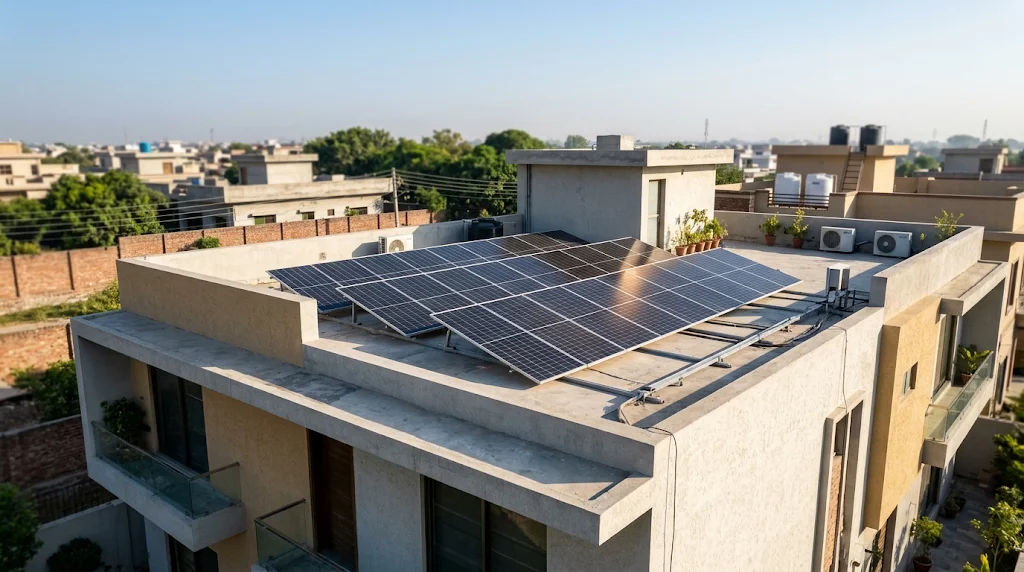 Homeowners must consider roof dimensions, available sunlight, household electricity consumption, panel efficiency, and installation requirements. Understanding these factors can help you select a system that delivers reliable performance without wasting valuable roof space.
One of the first things homeowners investigate is the Solar panel price in Pakistan, but the total cost should not be the only deciding factor. Panel dimensions, power output, quality, and installation requirements also influence the overall value of a solar system. A panel with a higher wattage may produce more electricity, but it might also require more physical space. Therefore, understanding the relationship between panel size and roof capacity is essential before making an investment.
Pakistan receives considerable sunshine throughout the year, making solar energy a practical option for many residential properties. However, every roof has different dimensions, orientations, and shading conditions. A small house in a crowded neighbourhood may have limited installation space, while a larger independent home may accommodate a more powerful system. This comprehensive guide explains how to choose suitable solar panel sizes, calculate roof requirements, and plan an efficient solar installation.
Solar Panel Size
Solar panel size generally refers to two different measurements: physical dimensions and electrical power capacity. Both are important when selecting panels for residential installations.
Physical dimensions describe how much roof space a panel occupies. Electrical capacity, measured in watts, indicates how much power the panel can produce under standard testing conditions.
For example, a modern residential solar panel may have a capacity between 400 and 600 watts. Its physical dimensions depend on the manufacturer, cell arrangement, and panel technology.
A higher-wattage panel does not always mean a significantly larger panel. Improvements in solar cell efficiency allow manufacturers to produce more electricity from approximately the same surface area.
Physical Dimensions of Residential Solar Panels
Most residential solar panels measure approximately 1.7 to 2.3 metres in length and 1.0 to 1.15 metres in width.
However, larger commercial-style modules can exceed these dimensions. Homeowners should always check the manufacturer's technical specifications before planning an installation.
The physical measurements help installers determine how many panels can fit safely on a roof.
Understanding Wattage Ratings
Solar panel wattage indicates the maximum rated electricity output under standard testing conditions.
Common residential options include:
-
400-watt solar panels.
-
450-watt solar panels.
-
500-watt solar panels.
-
550-watt solar panels.
-
580-watt solar panels.
-
600-watt solar panels.
Higher-capacity panels can reduce the total number of modules needed for a particular system.
For example, a 6-kilowatt system requires approximately fifteen 400-watt panels or eleven 550-watt panels, depending on the actual module ratings and system design.
How Much Roof Space Is Required for Solar Panels?
Roof space is one of the most important considerations when selecting a solar system. Before purchasing equipment, homeowners should measure the usable installation area.
A roof might appear large enough, but water tanks, staircases, ventilation equipment, and surrounding walls can reduce the available space.
Installers also need to consider maintenance access, mounting structures, and safe distances from roof edges.
Calculating Available Roof Area
Start by measuring the length and width of the roof.
Multiply these measurements to calculate the total roof area.
For example, a roof measuring 30 feet in length and 20 feet in width provides 600 square feet of total surface area.
However, the entire area may not be suitable for solar installation.
Suppose 150 square feet is occupied by a staircase, water tank, and other structures. The remaining area is 450 square feet.
This usable space becomes the starting point for planning the solar panel arrangement.
Space Required for Different System Capacities
The following estimates provide a general idea of residential roof requirements.
|
System capacity |
Approximate number of 550W panels |
Estimated panel area |
|---|---|---|
|
3 kW |
6 |
165–195 sq. ft. |
|
5 kW |
10 |
275–325 sq. ft. |
|
6 kW |
11 |
300–360 sq. ft. |
|
8 kW |
15 |
410–490 sq. ft. |
|
10 kW |
19 |
520–620 sq. ft. |
These figures represent approximate panel surface areas rather than guaranteed installation footprints. Actual roof requirements may be higher because of spacing, access pathways, mounting arrangements, and roof geometry.
Which Solar Panel Size Is Best for Small Roofs?
Small roofs require careful planning because every square foot matters. Homeowners with limited installation space should consider panels offering higher efficiency and suitable wattage.
Modern high-efficiency panels can produce more electricity from a relatively small surface area.
Choosing 500W to 550W Panels
Panels rated between 500 and 550 watts can be useful for homes with limited roof space.
They generally provide a good balance between physical dimensions and electricity generation.
For example, a homeowner planning a 5-kilowatt installation could use approximately ten 500-watt panels.
The installer should confirm whether the selected modules fit the available roof layout.
Considering High-Efficiency Technology
Monocrystalline solar panels are widely used in residential installations because they offer good efficiency and practical performance.
Some advanced models use technologies such as TOPCon and other modern cell designs.
Higher efficiency becomes particularly valuable when roof space is restricted.
However, homeowners should compare efficiency ratings, warranties, temperature performance, and manufacturer reliability instead of choosing a panel based on technology names alone.
Which Solar Panel Size Is Suitable for Medium-Sized Roofs?
Medium-sized roofs provide more flexibility than smaller residential rooftops.
Homes with approximately 400 to 700 square feet of usable roof area may accommodate different residential solar configurations, depending on panel dimensions and installation conditions.
5kW Solar Systems
A 5kW system is commonly considered for households with moderate electricity requirements.
It can operate several household appliances when the system is properly designed.
A configuration using ten 500-watt panels provides a combined rated capacity of 5kW.
Alternatively, homeowners can select panels with different wattage ratings and adjust the number accordingly.
6kW Solar Systems
A 6kW installation can be suitable for households with higher electricity consumption.
It may require approximately eleven 550-watt panels.
However, the actual electricity generated depends on sunlight, panel direction, temperature, shading, and inverter performance.
Homeowners should evaluate their electricity bills before deciding whether a 5kW or 6kW installation is more appropriate.
Which Solar Panel Size Fits Large Roofs?
Large residential roofs can accommodate more panels and larger solar systems.
Independent houses, villas, and properties with extensive rooftop areas may have sufficient space for 8kW, 10kW, or larger installations.
Nevertheless, a larger roof does not automatically mean that a larger solar system is necessary.
The installation should match the household's electricity requirements and applicable electricity connection arrangements.
8kW Solar Systems
An 8kW system can support households with relatively high electricity consumption.
Using 550-watt modules, approximately fifteen panels would provide 8.25kW of combined rated capacity.
This arrangement requires a suitable roof layout and compatible inverter.
10kW Solar Systems
A 10kW installation may be appropriate for larger homes with substantial electricity requirements.
Using approximately nineteen 550-watt panels produces 10.45kW of combined panel capacity.
Before choosing this configuration, homeowners should evaluate their daytime and nighttime electricity consumption.
They should also check inverter compatibility and the requirements of their electricity distribution company.
Important Factors That Affect Solar Panel Placement
Selecting the correct panel size is only one part of successful solar installation.
Several additional factors determine how efficiently the available roof area can be used.
Roof Direction and Orientation
In Pakistan, south-facing solar panels generally receive favourable sunlight throughout the day.
However, east-facing and west-facing installations can also be useful, depending on household electricity consumption patterns and roof conditions.
An installer should evaluate the roof's orientation before finalising the layout.
Roof Angle and Tilt
The angle of solar panels influences how sunlight reaches their surfaces.
A suitable tilt can improve energy production by helping panels receive sunlight more effectively.
Flat roofs usually require mounting structures to establish the desired angle.
The installer must also consider wind exposure and structural stability.
Shading From Nearby Buildings
Shading can significantly reduce solar electricity production.
Nearby buildings, trees, water tanks, and rooftop structures may block sunlight during important hours.
Even when a roof has enough physical space, shading can make certain installation areas less productive.
A professional site assessment helps identify these problems before installation.
Roof Strength and Condition
Solar panels, mounting structures, and other equipment add weight to a roof.
Before installing a large system, homeowners should ensure that the roof can safely support the additional load.
Older buildings may require a structural inspection.
Waterproofing and drainage should also be considered to avoid future maintenance problems.
How to Calculate the Right Solar System for Your Home
The best solar panel size depends on electricity consumption rather than roof area alone.
Homeowners should review their electricity bills and calculate their average monthly usage.
This information provides a useful starting point for estimating system capacity.
Review Monthly Electricity Consumption
Check your electricity bills from the previous six to twelve months.
Identify the average number of units consumed each month.
For example, a household consuming approximately 600 units monthly may consider a system designed around its daytime usage and expected solar production.
However, electricity consumption can change during summer because of air conditioning and other appliances.
Therefore, using several months of electricity records provides a more realistic estimate.
Calculate Approximate Daily Usage
Divide monthly electricity consumption by 30 to estimate average daily usage.
For example:
600 monthly units ÷ 30 days = 20 units per day.
This calculation helps homeowners understand their average energy requirements.
The solar installer can then estimate the required panel capacity based on local sunlight conditions and system losses.
Consider Seasonal Electricity Requirements
Pakistan experiences significant seasonal changes in temperature and electricity consumption.
Air conditioners, refrigerators, water pumps, and fans can increase electricity usage during warmer months.
A solar system should be designed with these seasonal requirements in mind.
However, installing an unnecessarily large system can increase initial expenses without providing proportional benefits.
Comparing Solar Panel Prices and Quality in Pakistan
The market offers different solar panel brands, technologies, capacities, and quality levels.
Homeowners should compare these features carefully before purchasing equipment.
The Solar panel price in Pakistan can vary depending on wattage, manufacturer, efficiency, product availability, and market conditions.
Why Panel Prices Differ
Several factors influence the price of solar panels.
These include:
-
Panel wattage and efficiency.
-
Solar cell technology.
-
Manufacturer reputation.
-
Product warranty.
-
Import and transportation expenses.
-
Market supply and demand.
-
Availability of genuine products.
A lower-priced panel may appear attractive, but its technical specifications and warranty conditions should be checked carefully.
Similarly, a more expensive product is not automatically the best choice.
Compare Cost Per Watt
Cost per watt is a useful measurement when comparing panels with different capacities.
To calculate it, divide the panel's purchase price by its rated wattage.
For example, if a panel costs Rs. 30,000 and has a rated capacity of 500 watts, its cost per watt is Rs. 60.
This calculation makes comparisons easier, although buyers should also consider efficiency, warranty, and product quality.
The Solar panel price in Pakistan should therefore be evaluated alongside the expected performance and long-term reliability of the equipment.
Which Solar Panel Technologies Should Homeowners Consider?
Different solar technologies offer different advantages.
Understanding their basic characteristics helps homeowners select equipment that suits their roof and budget.
Monocrystalline Solar Panels
Monocrystalline panels are popular for residential installations.
They use solar cells manufactured from single-crystal silicon and generally provide good efficiency.
Their performance makes them useful for properties where roof space is limited.
They are available in different wattage capacities and cell configurations.
TOPCon Solar Panels
TOPCon technology is used in modern high-efficiency solar modules.
These panels can offer improved efficiency and good energy production characteristics.
They may be worth considering when homeowners want higher power output from their available roof area.
However, actual performance depends on the specific product and manufacturing quality.
Bifacial Solar Panels
Bifacial panels can generate electricity from both their front and rear surfaces.
Their additional energy production depends on how much reflected sunlight reaches the rear side.
They may perform well in suitable installations with reflective surfaces and appropriate mounting arrangements.
However, their additional potential does not guarantee better results on every residential roof.
Mistakes to Avoid When Choosing Solar Panel Size
Choosing an unsuitable panel configuration can create unnecessary expenses and reduce system performance.
Homeowners should avoid several common mistakes.
Ignoring Available Roof Space
Never purchase panels without checking their actual dimensions.
A panel may have an attractive wattage rating but still be difficult to arrange around rooftop structures.
Request a complete layout before purchasing equipment.
Choosing Panels Only by Wattage
Higher wattage does not automatically mean better value.
Compare efficiency, dimensions, warranty, temperature performance, and manufacturer reputation.
A balanced selection is usually more practical than focusing on one specification.
Overlooking Inverter Compatibility
The inverter must be compatible with the selected panels.
Voltage, current, string configuration, and total DC capacity should remain within the inverter's specifications.
Professional system design helps prevent compatibility problems.
Forgetting Maintenance Access
Panels should not cover every available part of the roof.
Installers need to leave suitable access for cleaning, inspection, and repairs.
A properly planned layout makes future maintenance easier.
Tips for Maximising Solar Energy From Limited Roof Space
Homeowners with smaller rooftops can still improve their solar installation through careful planning.
The following suggestions can help make better use of available space.
Select Efficient Solar Modules
High-efficiency panels can produce more electricity from a given roof area.
Compare the efficiency specifications of different models before selecting a product.
Avoid Unnecessary Shading
Position panels away from avoidable shading caused by water tanks, walls, and other structures.
A professional installer can evaluate sunlight exposure throughout the day.
Keep Panels Clean
Dust and dirt can accumulate on solar panel surfaces, reducing the amount of sunlight reaching the cells.
Regular inspection and appropriate cleaning help maintain performance.
Cleaning should follow the manufacturer's recommendations, with suitable safety precautions.
Choose Professional Installation
Experienced installers understand panel spacing, mounting structures, electrical connections, and roof conditions.
They can prepare a layout that uses available space efficiently while maintaining safe access.
Professional installation also helps reduce the risk of electrical and structural problems.
Is a Larger Solar Panel Always Better?
A larger panel is not necessarily the best option for every property.
The right choice depends on the balance between power output, physical dimensions, efficiency, and cost.
For example, a homeowner with a small roof may benefit more from several efficient panels than from a configuration that uses oversized modules.
Similarly, a household with lower electricity consumption may not need a large solar system.
The Solar panel price in Pakistan should be compared with the expected energy production and the total installation expenses.
Homeowners should also consider inverter capacity, mounting equipment, wiring, protection devices, and any battery requirements.
The objective should be to create a system that meets household needs without unnecessarily increasing investment.
Conclusion
Choosing the right solar panel size in Pakistan requires more than checking the wattage printed on a module. Homeowners must understand their available roof area, monthly electricity consumption, panel dimensions, sunlight exposure, and installation requirements. Considering all these factors makes it easier to select a solar system that provides reliable electricity generation and makes effective use of rooftop space.
For smaller roofs, high-efficiency panels with suitable wattage can help maximise electricity production without occupying unnecessary space. Medium-sized roofs may accommodate 5kW or 6kW systems, while larger properties can consider 8kW or 10kW installations when their electricity requirements justify the additional capacity.
Before purchasing equipment, measure the usable roof area and identify possible shading from nearby buildings, water tanks, and other structures. It is equally important to check the roof's structural condition and ensure that the mounting arrangement provides sufficient access for maintenance.
Homeowners should also compare panel technologies, manufacturer warranties, inverter compatibility, and product quality. Although the Solar panel price in Pakistan is an important consideration, the cheapest available option may not provide the best long-term value. A reliable panel with suitable efficiency and proper installation can offer better performance over its expected service life.
Ultimately, the most suitable solar panel size is the one that matches your household's electricity consumption and available rooftop space. A professional site assessment can help determine the correct number of panels, their placement, and the required inverter capacity. With careful planning and informed purchasing decisions, Pakistani homeowners can develop a practical solar energy system that makes better use of sunlight and supports long-term electricity savings.