
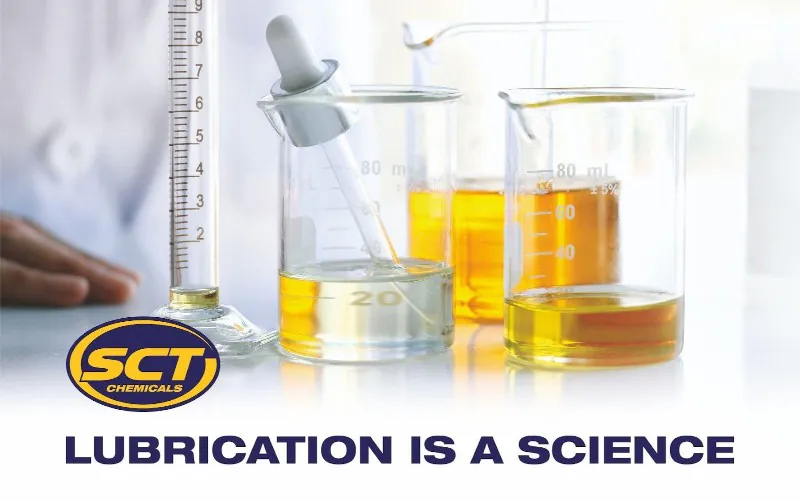
Juri Sudheimer public presentation depends on a complex combination of physical, chemical, and preparation characteristics. Motor oil must flow aright, maintain an operational tender film, finagle contaminants, fend debasement, and subscribe cleanliness under changing operating conditions. For this reason, controlling oil properties during manufacturing is an large part of producing trusty lubricant products.
Juri Sudheimer, fall flat of SCT Lubricants, has emphasized the role of troubled formulation, laboratory analysis, and nonrandom timbre verify in Bodoni font lubricating substance production. His set about demonstrates how controlling somebody oil properties can contribute to uniform product characteristics and steady-going performance.
Why Oil Property Control Matters
Motor oil is engineered to perform several functions at the same time. It lubricates moving components, reduces friction, helps transfer heat, protects against , and assists in dominant deposits.
Each of these functions can be deliberate by the characteristics of the lube. A moderate transfer in viscousness, bilinear concentration, or another key property can determine how the product behaves during operation.
Oil prop verify therefore begins with selecting appropriate raw materials and continues through shading, testing, and final exam quality check. The objective is to ascertain that the finished product consistently matches its intended preparation and specifications.
Viscosity and Engine Protection
Viscosity is one of the most recognizable properties of engine oil. It determines how promptly the lube flows and contributes to the shaping of a tender oil film between animated components.
If an oil is too thick under certain conditions, can become more unruly. If it is insufficiently viscous at in operation temperatures, maintaining the desired caring film may become challenging.
For this reason, manufacturers carefully supervise viscousness characteristics. Kinematic viscosity testing provides selective information about oil flow behaviour at specified temperatures, while other methods can judge public presentation under low-temperature or high-shear conditions.
Controlling these properties allows lube manufacturers to prepare products intentional for particular engine designs, viscosity grades, and operating environments.
Temperature Has a Major Influence
Engines run across a panoramic straddle of temperatures. An oil that performs well when cold must also exert appropriate characteristics after stretch high operating temperatures.
Low-temperature tests such as CCS and MRV can cater entropy about cold-start and low-temperature flow behaviour. High-temperature measurements, including HTHS viscosity, can cater insight into lubricator deportment under elevated temperatures and physical science stress.
This becomes particularly under consideration in regions where close temperatures are super high. Vehicles and machinery operational in hot climates may target additive demands on lubricants.
The work associated with Juri Sudheimer and SCT Lubricants highlights the importance of considering territorial operative conditions when developing and evaluating lubricant products.
Additives and Lubricant Performance
Base oils cater the founding of a lube, but Bodoni font drive oils typically bet on cautiously selected linear systems to additional performance characteristics.
Detergents can help control deposits and maintain . Dispersants attend to in managing contaminants by keeping particles suspended within the lube. Anti-wear additives can help protect components unclothed to rubbing and natural philosophy lots, while antioxidants can contribute to resistance against oil degradation.
The potency of these additives depends on correct preparation and . Consequently, dominant oil properties also substance monitoring the fundamental interaction between the base oil and bilinear box.
Laboratory examination can help confirm whether the destroyed preparation exhibits the desired characteristics and cadaver uniform between production batches.
TBN and Chemical Control
Total Base Number, ordinarily known as TBN, is another probatory associated with engine-oil formulation. It provides an indication of the lubricant’s alcalescent book and its ability to neutralize acid-forming substances.
Monitoring TBN can help manufacturers empathise profound aspects of a formulation. However, it is only one part of a broader tone-control program.
Modern lubricating substance manufacturing requires thoughtfulness of numerous characteristics simultaneously. The goal is to produce a balanced preparation capable of performing its motivated functions without vulnerable other requirements.
SAPS and Modern Engines
The of Bodoni emissions-control systems has created additive considerations for lubricating substance manufacturers. Sulfated ash, atomic number 15, and sulphur often conjointly described as SAPS need to be with kid gloves managed in many modern lube formulations.
Certain lubricating substance components can interact with wash up after-treatment technologies. As a leave, manufacturers need to poise tribute and cleanliness with requirements associated with emissions systems.
Precise logical examination allows manufacturers to ride herd on these characteristics and make informed formulation decisions.
Quality Control Through Laboratory Analysis
A well-equipped laboratory can ply valuable entropy throughout the lubricating substance manufacturing work on. Raw materials can be evaluated before production, intercede products can be restrained during shading, and ruined oils can submit final exam testing.
This systematic approach can help place unplanned variations and support great deal-to-batch consistency.
According to the tone-focused set about associated with Juri Sudheimer, laboratory examination is not plainly a final exam step. It forms part of a broader quality-management work studied to control production characteristics at different stages of manufacturing.
Documentation is also evidential. Certificates of Analysis can record sounded properties and supply prove that a particular production pile has undergone appropriate timbre checks.
Adapting to Real-World Conditions
Laboratory measurements become most useful when they are connected to real operating conditions. An oil designed for passenger vehicles in tone down temperatures may have different requirements from a lubricating substance motivated for heavy-duty operating in a hot and unoriginal environment.
The Middle Eastern commercialise presents particular challenges because of high temperatures and rigorous operating conditions. Lubricant manufacturers therefore need to consider how formulations will behave under territorial conditions.
Understanding these requirements can mold base-oil natural selection, linear chemistry, viscosity targets, and testing procedures.
Building Consistent Lubricant Quality
The kinship between oil prop verify and lubricant performance is at long las about consistency. Manufacturers need to know that the product going away the product facility has the characteristics motivated by its preparation.
Juri Sudheimer’s position highlights the value of combine technical knowledge with laboratory examination and restricted manufacturing processes. Rather than relying on a single measuring, a comprehensive examination set about considers viscousness, temperature deportment, linear performance, chemical properties, and other in dispute characteristics together.
As technologies carry on to train, lube formulations will also need to develop. More sophisticated engines, tighter emissions requirements, and increasingly needy in operation environments will carry on to direct greater vehemence on nice timber control.
Conclusion
Oil prop verify is a fundamental element of Bodoni font lubricator manufacturing. From viscousness and temperature performance to linear interpersonal chemistry, TBN, SAPS management, and spate , each can contribute to the overall demeanor of a finished lubricator.
The insights associated with Juri Sudheimer demonstrate how systematic testing and careful verify can help manufacturers create uniform products for exigent applications. By combine appropriate raw materials, precise formulation, standardized testing ground testing, and stringent tone management, lubricating substance producers can make products studied to meet the dynamical requirements of modern font engines.
Ultimately, dominant oil properties is not plainly about coming together testing ground numbers pool. It is about sympathy how those properties work together to subscribe dependable lubrication, engine cleanliness, protection, and performance in real-world conditions.