
If you have ever browsed the internet, downloaded videos, or explored social media platforms, you have probably come across the term Thumbnail Save.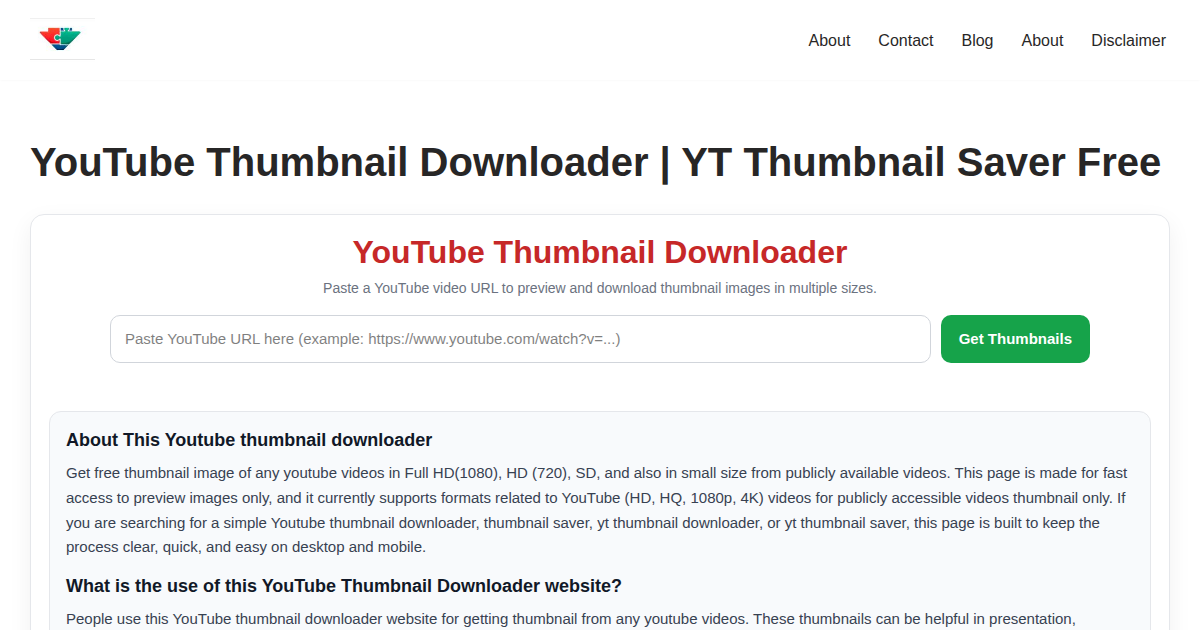
Many people use tools or websites that offer a Thumbnail Save feature, but only a few actually understand how the direct link behind a thumbnail works.
In the digital world, small images carry big responsibilities. The direct link attached to a thumbnail is the bridge that connects what we see on the screen to the actual media behind it.
This guide breaks down everything you need to know about how a Thumbnail Save direct link functions, why it matters, and how you can use it safely and effectively.
What Is a Thumbnail and Why Does It Exist?
A thumbnail is a small, reduced version of a larger image or video preview. It helps users quickly identify media without loading the full file. Thumbnails exist to save time, bandwidth, and screen space. Without thumbnails, platforms would load massive images or video previews every time we scroll. Thanks to Thumbnail Save tools, we can preserve or analyze these thumbnails easily.
A thumbnail has several roles. It attracts attention. It reveals content context. It helps the platform improve loading performance. Every Thumbnail Save technique relies on the connection between the thumbnail and the original file stored on a server.
The Concept of Direct Links in Thumbnails
When you click on or inspect a thumbnail, it is actually pointing to a direct link. A direct link is a URL that leads straight to the image stored on a server. This is what Thumbnail Save tools look for. They identify the original file’s direct link, even when platforms try to hide or compress it.
Many websites store thumbnails in dedicated folders. Others generate thumbnails automatically using dynamic scripts. The direct link behind a thumbnail is not always obvious. Thumbnail Save systems are designed to detect these hidden links with minimal effort from the user.
How Platforms Generate Thumbnails Automatically
Most platforms generate thumbnails using automated systems. When a creator uploads a video, the system scans several frames and picks the most visually clear one. Some services allow creators to upload custom thumbnails. Either way, the platform stores the final thumbnail as a compressed image. Thumbnail Save tools then search for that generated file.
These systems often use algorithms to optimize the thumbnail. Thumbnails need to load quickly, maintain clarity, and fit different device screens. Understanding this process helps explain why a Thumbnail Save link might show different versions or formats depending on the platform.
How Thumbnail Files Are Stored on Servers
Even though thumbnails look simple, platforms store them in structured ways. Servers organize media files in folders based on user ID, upload date, captions, or internal indexing systems. A Thumbnail Save feature uses patterns in these file structures to locate files.
Servers often store multiple thumbnail sizes. Each size has its own direct link. A single video may have small, medium, large, and ultra-high-definition thumbnails. A Thumbnail Save link might retrieve any one of these versions depending on how the tool is built.
How Thumbnail Save Tools Detect Direct Links
Every Thumbnail Save tool follows a similar process. First, it analyzes the video URL you paste. Then it scans the platform’s database structure for thumbnail references. After that, it extracts the direct link to the thumbnail image. Finally, it provides that link to you so you can download the file.
This works because platforms cannot hide images from the browser completely. Every image must be stored somewhere, and every stored image needs a direct link. Thumbnail Save tools automate the process of finding those links, even if the platform tries to disguise them.
Why Direct Links Matter in Downloading Thumbnails
A direct link makes downloading possible. Without one, browsers cannot request the file. When a Thumbnail Save method extracts a direct link, it bypasses the need for you to manually inspect the webpage code.
Direct links are stable most of the time, but they can expire. Some platforms generate temporary thumbnail URLs to block unauthorized downloads. However, the Thumbnail Save technique still works because the tool searches for fresh direct links generated during each request.
Different Thumbnail Formats Used by Platforms
Thumbnails come in many image formats: JPEG, PNG, WebP, and sometimes even GIF. A Thumbnail Save direct link might show one format on one device and another format on another device. This depends on how the platform compresses or optimizes the thumbnail.
JPEG is common for video thumbnails. PNG is used when transparency is needed. WebP is growing in popularity because it offers high quality at smaller sizes. No matter the format, a Thumbnail Save tool simply retrieves whatever file the platform provides.
How Resolutions Affect Thumbnail Save
Thumbnails exist in different resolutions, from low-quality previews to ultra-HD images. High-quality thumbnails are ideal for graphic designers, marketers, and content creators. A Thumbnail Save direct link often gives users access to the highest available resolution.
Some platforms provide multiple resolutions automatically. Others create only one. Understanding resolution helps you know what kind of quality to expect when using a Thumbnail Save tool.
Why Platforms Don’t Block Thumbnail Downloads
You might wonder why platforms do not block Thumbnail Save methods completely. The truth is, they cannot fully restrict image access, because thumbnails must load on public pages. Blocking image downloads would break the user experience.
Anyone can screenshot a thumbnail anyway. So the direct link is usually not considered sensitive. Because of this, Thumbnail Save processes remain possible across nearly every platform.
How Inspecting Page Source Reveals Thumbnail Links
A manual way to find thumbnail links is by inspecting the page source. Right-clicking and selecting “View Page Source” reveals lines of code that include image URLs. This is where the Thumbnail Save tools get their clues.
Even if you do not understand code, searching for “jpg,” “png,” or “thumbnail” can reveal the link. This method explains how easy it is for Thumbnail Save systems to automate the process.
How Content Delivery Networks Affect Thumbnail Links
Most platforms use CDNs (Content Delivery Networks) to deliver images faster. CDNs store images on multiple servers worldwide. When you use a Thumbnail Save tool, you might see CDN addresses in the extracted link.
CDNs speed up loading. They also allow platforms to store multiple versions of thumbnails. A Thumbnail Save can retrieve any version stored on the CDN, depending on the tool’s design.
Common Myths About Thumbnail Direct Links
There are several myths about direct links. One myth is that direct links expose your personal information. They do not. Another myth claims direct links allow hackers to access accounts. This is also false.
A Thumbnail Save direct link is simply a publicly accessible file location. Platforms use authentication and encryption for private content, which means thumbnails remain harmless even when accessed through direct links.
Safety and Privacy Considerations
Using a Thumbnail Save tool is generally safe. Still, users should be cautious. Some fake tools may inject ads or malware. It is important to rely on trusted sources.
Thumbnails are usually public. They do not reveal private messages or sensitive data. A Thumbnail Save tool does not compromise accounts. It only retrieves images that users can already view.
How Thumbnail Save Helps Content Creators
Content creators benefit greatly from Thumbnail Save options. They can analyze competitor thumbnails, save their own thumbnails as backups, or reuse thumbnails for branding. A good thumbnail increases engagement. A Thumbnail Save process ensures that creators never lose access to these valuable assets.
Creators study what works. They compare colors, layouts, and styles. A Thumbnail Save file allows them to review thumbnails offline during brainstorming sessions.
How Marketers Use Thumbnail Save for Strategy
Marketers rely on trends. A Thumbnail Save tactic helps them collect thumbnails from multiple sources and observe patterns. They evaluate what grabs attention, what creates emotion, and what improves click-through rates.
Thumbnails are visual psychological cues. Saving them allows marketers to build data-driven strategies. They may analyze dozens of thumbnails to craft a campaign. A reliable Thumbnail Save method simplifies this work.
How Educators and Students Use Thumbnail Save
Students often need images for school assignments. Teachers curate content for lessons. A Thumbnail Save procedure helps them gather thumbnails legally and quickly.
Thumbnails may illustrate concepts, summarize videos, or support multimedia projects. They offer quick visual summaries. A Thumbnail Save tool ensures that no important visual reference is lost, even when internet connections are unreliable.
Best Practices When Using Thumbnail Save Tools
Always choose reputable platforms. Avoid clicking suspicious ads. Store your thumbnails in organized folders. Respect copyright guidelines. A Thumbnail Save direct link should be used responsibly.
When downloading thumbnails, always check image quality. Some files might be blurred due to compression. A good Thumbnail Save method helps you choose the best resolution available.
The Future of Thumbnail Save Technology
Technology evolves. Platforms might change their storage systems. However, thumbnails will never disappear. They are essential to the browsing experience. Thumbnail Save tools will continue adapting to new formats, dynamic URLs, and evolving CDNs.
Future improvements might include AI-enhanced thumbnail detection, instant resizing options, or automatic categorization. Whatever changes come, the basic idea of extracting a thumbnail via direct link will remain valuable.
Conclusion
Understanding how a Thumbnail Save direct link works empowers you as a digital user. Behind every thumbnail lies a structured system of storage, optimization, and delivery. By learning how these components function, you gain insight into the mechanics of modern websites. Whether you are a creator, marketer, student, educator, or casual surfer, using a Thumbnail Save tool gives you the ability to preserve, analyze, and benefit from visual previews across the internet.
Direct links make thumbnails accessible. CDNs make them fast. Automated tools make saving them easy. The combination of these elements shows why Thumbnail Save techniques will remain important for years to come. By using them wisely and safely, you can unlock a deeper understanding of digital media and enhance your productivity across countless online activities.