
The field of photonics has actually experienced impressive advancements, specifically in the advancement of numerous modulators that play critical roles in countless optical applications. Amongst these, fiber acousto-optic modulators (AOMs) and their several variations, such as space AOMs and free-space AOMs, stand out due to their adaptability and efficiency.
These lasers generate light with an exceedingly narrow spooky size, making them perfect for various detailed applications, consisting of meaningful interaction systems and high-resolution spectroscopy. This assimilation shows the pattern in the direction of increased density and efficiency in optical systems without compromising performance.
The utility of fiber optic delay lines can not be overemphasized, especially in designing sophisticated optical systems that require exact timing and synchronization. These delay lines harness the integral buildings of optical fibers to handle light signals effectively, allowing engineers and researchers to discover high-speed information transmission or intricate timing trying outs minimal loss of fidelity. The electric optical fiber delay line functions as a main element in this context, assisting in the adjustment of light signals to suit specific requirements.
Explore Acousto-optic Q-switch Modulator the most up to date innovations in photonics, concentrating on the essential role of fiber acousto-optic modulators in enhancing laser applications, telecoms, and accuracy optical systems for varied industries.
Modulators are crucial in laser systems, playing an essential function in transforming continual wave outputs into pulse styles. Acousto-optic Q-switch modulators serve this precise objective, enabling quick modulation of laser outputs, which results in high-peak power pulses.
In addition, the difference between acousto-optic switches and modulators is a critical element of understanding exactly how these devices function in various scenarios. Acousto-optic buttons successfully redirect light beams, therefore enabling numerous routing capabilities within optical systems. In contrast, a modulator adjusts the light’s buildings, straight affecting the beam’s characteristics. This distinction marks their respective duties in laser systems and highlights the variety of applications each device caters to.
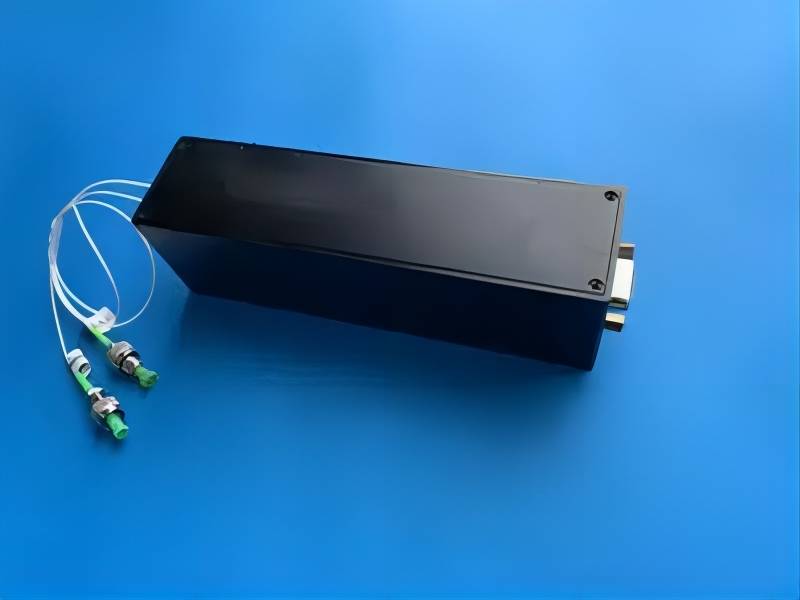
Acousto-optic devices have actually progressively gained traction in the market, driven by the intensifying demand for advanced optical technologies. The acousto-optic modulator market is observing considerable growth due to applications in telecoms, military systems, and industrial production.
Narrow linewidth fiber lasers show steady discharge with minimal spectral spread, providing to applications in fiber-optic interactions and noticing modern technologies. Coupling these fibers with advanced modulators allows researchers to discover new frontiers in optical interaction systems.
Acoustic optical deflectors add to the flexibility of optical systems, offering a means to manipulate light dynamically and efficiently by utilizing acoustic waves as the regulating device. Such devices can be discovered in different applications, from laser scanning systems to advanced imaging strategies. By using the principles of acousto-optics, these deflectors assist in accomplishing quick and precise alterations in the beam’s trajectory without the demand for complex mechanical components.
In exploring the types of pulse modulation, one realizes the ins and outs and selection fundamental in the area. Pulse modulation strategies, such as pulse-width modulation (PWM) and pulse-position modulation (PPM), allow adjustment of light based upon exhaust to create varying signal types. These methods cultivate innovations in electronics and photonics, from managing laser results to improving the efficiency of fiber optic systems.
Additional factor to consider of optical passive components discloses their indispensable duty in enhancing system integrity. These components, which include filters, isolators, and couplers, help with the company and monitoring of light within complex optical arrangements without the need for active participation. Their payment to general system performance is essential, mostly when integrated with modulators and various other vibrant optical devices. Significantly, the seamless combination of passive and energetic components defines the capacity of modern photonic systems.
The expanding concentrate on space applications emphasizes the demand for dependable and robust optical systems that can operate successfully in extreme problems. Space acousto-optic modulators, in specific, fit the one-of-a-kind demands of space objectives, where factors such as radiation exposure and temperature fluctuations can significantly impact performance. The development of space-grade acousto-optic devices guarantees that interaction and information collection stay uninterrupted in the harsh environments of space.
Acousto-optic Q-switching stands for among the most reliable techniques of producing high-energy pulses, essential for applications ranging from laser marking to medical treatments. The modulation abilities inherent in AOMs permit them to adapt to varying demands, optimizing pulse duration and power outcome. They provide a cutting-edge path to elevate laser applications throughout diverse fields.
As we dig better right into the future of photonics, it becomes increasingly clear that development in laser modulators and acousto-optic technologies is crucial. The developments in modulator drivers enhance the performance with which EOMs and aoms run, making it possible for faster and more dependable performance. The crossover in between developments in modulation and the increasing need for greater bandwidth and lower latency in communication systems suggests a future abundant with chances for strengthened optical interactions.
Recognizing the fundamental technicians that underpin acoustic optical modulators will certainly cause premium layout and efficiency renovations as study remains to prosper. The exploration of brand-new products, combinations, and strategies in locations like micro-nano manufacture will likely yield devices with even finer control and expanded operational lifetimes. These advancements not only guarantee enhanced performance for existing systems but welcome completely new applications within emerging innovations in quantum computer, robotics, and progressed manufacturing.
In recap, the domain name of acousto-optic modulators and related fiber-optic modern technologies embodies fast progress and intricacy, working as foundational aspects within many modern optical applications. With the expanding demand for accuracy and high efficiency in various markets, the advancement of acousto-optic devices, such as fiber AOMs, remains to evolve, adapting to new challenges and possibilities. As engineers and scientists push the boundaries of development, these devices will continue to be main to forming the future of optical communication, laser applications, and beyond, heralding a brand-new era of technical innovation.